
![[Olewave's Long Review] Efficient Training of Neural Transducer for Speech Recognition](/media/video/2022/07/olewaves-long-review-efficient-training-of-neural-transducer-for-speech-recognition/preview.jpg)
[Olewave's Long Review] Efficient Training of Neural Transducer for Speech Recognition
Neural transducers are the workhorse of streaming ASR, but training them efficiently is famously painful: the RNN-T loss has cubic memory in sequence length, t…

Boris Johnson’s Rise and Fall - an analysis of the mics
Political news is not usually what voice AI engineers cue up for a Friday afternoon, but Boris Johnson's resignation announcement, delivered in front of a bank…


How Does the All-New Dictation in iOS 16 Work? Reveal Apple's Secret Sauce by a Speech Researcher!
Apple's iOS 16 dictation runs fully on-device, and that single design choice has cascading consequences for latency, privacy, and what kinds of ASR architectur…
![[Long Review] Conformer: Convolution-augmented Transformer for Speech Recognition](/media/video/2022/06/long-review-conformer-convolution-augmented-transformer-for-speech-recognition/preview.jpg)
[Long Review] Conformer: Convolution-augmented Transformer for Speech Recognition
Conformer is the model that quietly took over end-to-end ASR, and its recipe, bolt a convolution module onto every Transformer block, turned out to be one of t…
![[Long Review] Axial Attention in Multidimensional Transformers](/media/video/2022/05/long-review-axial-attention-in-multidimensional-transformers/preview.jpg)
[Long Review] Axial Attention in Multidimensional Transformers
Full self-attention over an image or a video is prohibitively expensive, so how do you keep the expressiveness of a Transformer without the quadratic blowup?
![[Short Review] Axial Attention in Multidimensional Transformers](/media/video/2022/05/short-review-axial-attention-in-multidimensional-transformers/preview.jpg)
[Short Review] Axial Attention in Multidimensional Transformers
Axial attention is one of those elegant ideas that keeps Transformers tractable on high-dimensional data: instead of attending over every pixel or every time-f…
![[Long Review] Transfer Learning from Speaker Verification to Multispeaker Text-To-Speech Synthesis](/media/video/2022/05/long-review-transfer-learning-from-speaker-verification-to-multispeaker-text-to-speech/preview.jpg)
[Long Review] Transfer Learning from Speaker Verification to Multispeaker Text-To-Speech Synthesis
This is the paper that made zero-shot voice cloning practical: train a speaker encoder on a discriminative verification task with thousands of noisy, transcrip…
![[Short Review] Transfer Learning from Speaker Verification to Multispeaker Text-To-Speech Synthesis](/media/video/2022/05/short-review-transfer-learning-from-speaker-verification-to-multispeaker-text-to-speech/preview.jpg)
[Short Review] Transfer Learning from Speaker Verification to Multispeaker Text-To-Speech Synthesis
The Google paper that kicked off the modern zero-shot voice cloning wave has a beautifully clean architecture: a speaker encoder trained on verification, a Tac…
![[Short Review] Wav2Seq: Pre-training Speech-to-Text Encoder-Decoder Models Using Pseudo Languages](/media/video/2022/05/short-review-wav2seq-pre-training-speech-to-text-encoder-decoder-models-using-pseudo/preview.jpg)
[Short Review] Wav2Seq: Pre-training Speech-to-Text Encoder-Decoder Models Using Pseudo Languages
Self-supervised pretraining like wav2vec 2.0 gave us great speech encoders, but if you want a full encoder-decoder ASR system, the decoder was still starting f…
![[Long Review] Towards Zero-Label Language Learning](/media/video/2022/05/long-review-towards-zero-label-language-learning/preview.jpg)
[Long Review] Towards Zero-Label Language Learning
What if you could train task-specific NLP models without a single human-labeled example? "Towards Zero-Label Language Learning" leans hard into that question.
![[Long Review] Fully Sharded Data Parallel: faster AI training with fewer GPUs](/media/video/2022/04/long-review-fully-sharded-data-parallel-faster-ai-training-with-fewer-gpus/preview.jpg)
[Long Review] Fully Sharded Data Parallel: faster AI training with fewer GPUs
Training a billion-parameter speech or language model on a modest GPU budget used to mean picking your poison across pipeline parallelism, tensor parallelism, …
![[Short Review] Fully Sharded Data Parallel: faster AI training with fewer GPUs](/media/video/2022/04/short-review-fully-sharded-data-parallel-faster-ai-training-with-fewer-gpus/preview.jpg)
[Short Review] Fully Sharded Data Parallel: faster AI training with fewer GPUs
Fully Sharded Data Parallel is Meta's answer to a question every speech and language team eventually asks: how do we train models an order of magnitude bigger …
![[Short Review] Deduplicating Training Data Makes Language Models Better](/media/video/2022/04/short-review-deduplicating-training-data-makes-language-models-better/preview.jpg)
[Short Review] Deduplicating Training Data Makes Language Models Better
How much of your language model's "generalization" is actually just regurgitation?
![[Long Review] Hurdles to Progress in Long Form Question Answering](/media/video/2022/04/long-review-hurdles-to-progress-in-long-form-question-answering/preview.jpg)
[Long Review] Hurdles to Progress in Long Form Question Answering
Long-form question answering is one of those benchmarks that looks impressive on the leaderboard and disturbing under a microscope.
![[Long Review] Finetuned Language Models Are Zero-Shot Learners](/media/video/2022/03/long-review-finetuned-language-models-are-zero-shot-learners/preview.jpg)
[Long Review] Finetuned Language Models Are Zero-Shot Learners
Before InstructGPT made instruction tuning a household phrase, Google's FLAN paper made the case that a modest amount of multi-task fine-tuning on natural-lang…
![[Long Review] 'GShard': Scaling Giant Models with Conditional Computation and Automatic Sharding](/media/video/2022/02/long-review-gshard-scaling-giant-models-with-conditional-computation-and-automatic/preview.jpg)
[Long Review] 'GShard': Scaling Giant Models with Conditional Computation and Automatic Sharding
Scaling a Transformer past a hundred billion parameters gets philosophical fast: do you activate the whole network for every token, or route each token to the …

Triplets-like Russian Figure Skaters: Can Kullback-Leibler Divergence be Used Tell Their Difference?
Speaker adaptation is one of those ASR problems that sounds solved until you actually try to adapt a sequence-to-sequence model without wrecking the encoder's …

Is Nathan Chen's 4 Flip scored by Mixture-of-Experts? Part 1: Switch Transformers: sparse MoE models
Framed with a wink at Nathan Chen's quad flip scoring, this talk unpacks Switch Transformer, Google's clean and aggressively simplified take on Mixture-of-Expe…
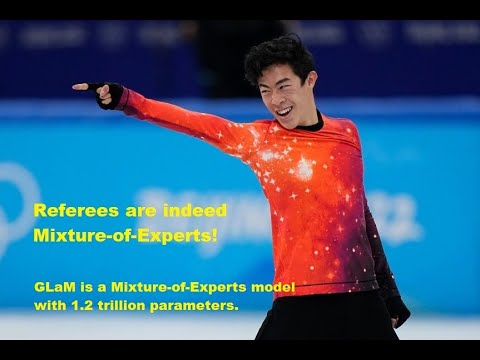
Is Nathan Chen's 4 Flip scored by Mixture-of-Experts? Part 2: GLaM:Efficient Scaling of LMs with MoE
Part 2 of the MoE mini-series turns to GLaM, Google's 1.2-trillion-parameter Mixture-of-Experts language model that matches or beats GPT-3 on zero-, one-, and …

BERT Paper Reviewed from a Speech Perspective
BERT hardly needs an introduction in NLP, but reading it through a speech engineer's eyes uncovers a different set of lessons than the standard "masked languag…
Transformer: Attention is All You Need and Listen, Attend and Spell -- from a Speech Perspective
Two papers, one story. "Attention Is All You Need" gave the world the Transformer and reset how sequence modeling gets done, while "Listen, Attend and Spell" (…

From Breaking Bad to Wav2vec 2.0: A Framework for Self-Supervised Learning of Speech Representations
What do Walter White, Jesse Pinkman, and a batch of unlabeled audio have in common?

Exploring Wav2vec 2.0 fine-tuning for improved speech emotion recognition
Speech emotion recognition has long been stuck with tiny labeled datasets and hand-crafted acoustic features.